
Greenville continues to attract new residents, but not everyone who moves here decides to stay long term.
In fact, Greenville is not experiencing a population exodus. South Carolina was the fastest-growing state in the country between July 2024 and July 2025, adding more than 66,000 residents through net domestic migration alone. Greenville County has also grown from about 526,000 people in 2020 to more than 583,000 in 2025—an increase of about 11%.
Still, at Hamilton & Co., we work with many relocation clients and occasionally see the other side of the story: people who moved to Greenville and later decide to leave. Sometimes, they even return to the state they originally moved from.
Why?
Usually, it is not because Greenville suddenly became a bad place to live. More often, the lifestyle they imagined before moving to Greenville, SC does not quite match their everyday life after the move.
Here are some of the most common reasons we see—and what future Greenville residents can learn from them.
Where are most people moving to in SC?
The Upstate, the Myrtle Beach area, and communities around Charleston continue to be some of South Carolina's major growth areas.
Looking at Census population growth between 2020 and 2025:
- Horry County, home to Myrtle Beach, grew about 21.8%
- Berkeley County, near Charleston, grew about 19.5%
- Spartanburg County grew about 16.1%
- Greenville County grew about 11%
Population growth is not exactly the same as measuring every household move, but it clearly shows that people are still choosing both the South Carolina coast and the Upstate.
So if you are asking, “Is Greenville, SC, a good place to live?” the number of people continuing to move here suggests that, for many people, the answer is yes.
But that does not mean Greenville is the right fit for everyone.
What are the top reasons for residents relocating from Greenville, SC?
1. They moved for Greenville—but bought a home too far from it
One of the biggest mistakes is choosing a house based mainly on price instead of the lifestyle that originally attracted you to Greenville.
South Carolina still has a lower overall cost of living than many parts of the country, but that does not mean every part of Greenville has inexpensive real estate.
In June 2026, the median sale price inside the City of Greenville was about $525,000, according to Redfin. That was about 17% above the national median sale price.
That can surprise people who arrive expecting very cheap homes in Greenville, SC.
A buyer may realize that the same budget gets them a much larger house—and possibly several acres—farther outside Greenville. On paper, that can look like a great deal.
But ask yourself why you wanted to move here in the first place.
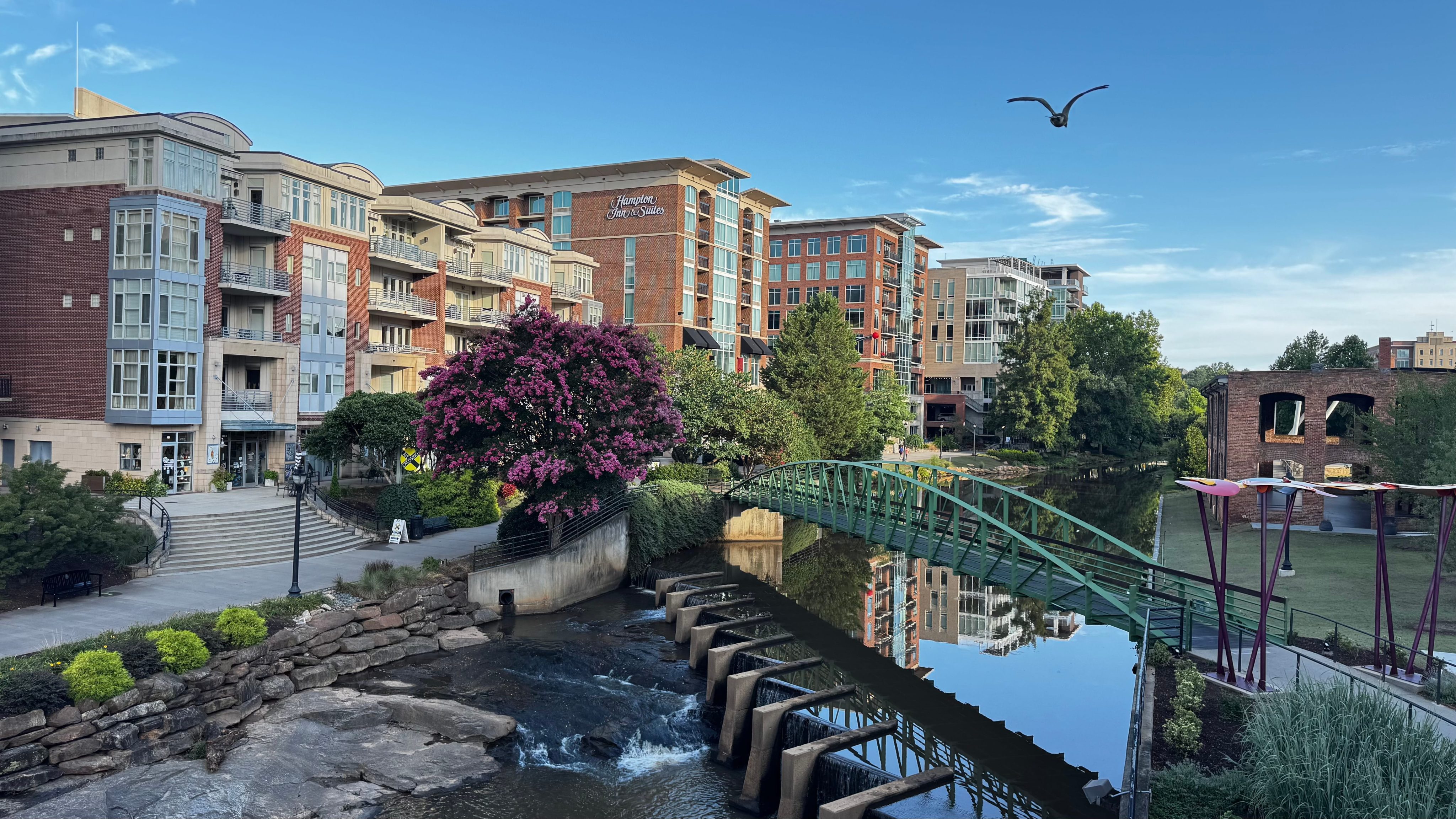
If you fell in love with Greenville because of Falls Park, restaurants, coffee shops, the Swamp Rabbit Trail, farmers markets, events, and the ability to easily spend time downtown, living far away may change the experience completely.
There is nothing wrong with living outside the city. The key is choosing the location intentionally.
Travelers Rest, for example, has its own walkable downtown and direct access to the Swamp Rabbit Trail. Greer and Mauldin also offer restaurants, community events, parks, and their own growing town centers while keeping you closer to Greenville.
Before you buy a home in Greenville, SC, think about your normal Tuesday—not just the house.
How long will your commute be? Where will you get coffee? Where will you meet friends? How often are you realistically willing to drive downtown?
The right location can matter just as much as the right house.
2. They miss family and old social connections
For some people, Greenville is a great city, but it cannot replace the people they left behind.
This is especially common with relocation buyers who underestimate how important nearby family and longtime friendships are to their daily lives.
Greenville has plenty of newcomers, social groups, churches, sports leagues, volunteer organizations, neighborhood events, and activities. New subdivisions can also make it easier to meet other families who recently relocated.
But building real friendships takes time.
For some people, being several states away from parents, children, grandchildren, or lifelong friends eventually becomes more important than Greenville's lower taxes, outdoor activities, or quality of life.
Before relocating, think about how often you currently see the people closest to you. Would seeing them only a few times a year be enough?
That question can be just as important as comparing home prices.
3. The weather is different from what they expected
Greenville has a mild Southern climate, but it still has four real seasons.
Someone moving from New York, Illinois, or another colder state may love Greenville's longer fall, earlier spring, and generally milder winters.
Someone coming from Florida or Southern California may see things differently.
Greenville can get freezing temperatures, ice, and occasional snow. The 1991–2020 climate normals for the Greenville-Spartanburg airport show an average of about 3.9 inches of snow per year.
Snow is certainly not an everyday winter problem, but a snow or ice day is possible.
Then there is summer. Greenville summers can be hot, humid, and stormy.
If weather is one of your main reasons for relocating, visit Greenville during different seasons instead of only coming for a beautiful October weekend.
4. Their career does not translate well to Greenville's job market
Greenville has a growing economy, but it is still a smaller job market than Atlanta, Charlotte, New York, or other major metropolitan areas.
This became especially important after the pandemic.
Some people moved to Greenville while working fully remote. If their employer later required them to return to an office—or they lost that remote position—they suddenly needed to find similar work locally.
Greenville has major opportunities in healthcare, manufacturing, engineering, business services, education, and hospitality. Manufacturing remains especially important to the Upstate economy, with companies such as BMW and Michelin among South Carolina's major employers.
And the local economy is growing. The Greenville-Anderson-Greer metro had an unemployment rate of about 3.9% in June 2026, while nonfarm employment was up from the previous year.
Still, certain specialized careers have fewer local options. Average wages can also be lower than in larger U.S. markets. BLS data put the Greenville metro's average hourly wage at $28.49 in May 2025 compared with $33.54 nationally.
If you plan to relocate to Greenville, SC with a remote job, it is worth researching what your backup job options would look like locally.
5. Greenville's rapid growth is changing the area
Some residents love Greenville's growth. Others miss the slower Greenville they remember.
More people mean more restaurants, businesses, entertainment, neighborhoods, and job opportunities.
They also mean more traffic, construction, apartments, subdivisions, and development.
Greenville County itself has acknowledged that parts of its road system are struggling to keep pace with population and employment growth.
Woodruff Road is probably the best-known example. SCDOT says portions of the corridor experience high levels of congestion, with more than 40,000 vehicles per day on its busiest section. A major congestion-relief project is planned specifically because of the traffic volumes and delays.
For longtime residents who loved Greenville when it felt smaller and quieter, that growth can be frustrating.
Some decide to move farther into the Upstate in search of more land, less traffic, and a slower pace.
That does not mean Greenville is losing residents overall—the population numbers clearly show continued growth. It simply means that growth itself changes what some people loved about the area.
What are the downsides of living in Greenville, SC?
Some of Greenville's biggest downsides are rising housing costs, traffic, hot and humid summers, a smaller job market than major cities, and the challenges that come with rapid growth.
Another important issue is location. The lifestyle people see when visiting Downtown Greenville is very different from living 30 or 40 minutes outside the city.
That difference is behind one of the biggest relocation mistakes we see.
Is Greenville, SC, a good place to live?
For many people, yes. But the better question is whether Greenville fits the life you actually want to live.
Greenville offers a beautiful downtown, access to the mountains, parks and trails, a growing restaurant scene, mild winters, and many different types of communities. That is why thousands of people continue moving to the area.
But relocation works best when you look beyond the highlight reel.
Before moving to Greenville, SC, think carefully about:
- How close you want to live to downtown
- Your realistic housing budget
- Your career options if your job changes
- How important it is to live near family
- How much driving you are comfortable doing
- Whether you prefer an established neighborhood, new community, acreage, or walkable lifestyle
- How you feel about Greenville's continued growth
A bigger house for less money does not automatically create a better life.
At Hamilton & Co., we help relocation buyers compare communities throughout the Greenville area—not simply find a house. If you are considering moving to Greenville, SC or starting to look at homes in Greenville, SC, understanding how different parts of the Upstate actually feel can help you make a move you will still be happy with years from now.
Check out this article next